Category Archives: Saudi Arabia News

SR 500 na multa para sa pagsusuot ng malaswa na shorts sa Saudi Arabia

Ang pagsusuot ng indecent shorts sa Saudi Arabia ay isang paglabag sa pampublikong ugali at may parusang multang SR 500.

Public Decorum Code 2019

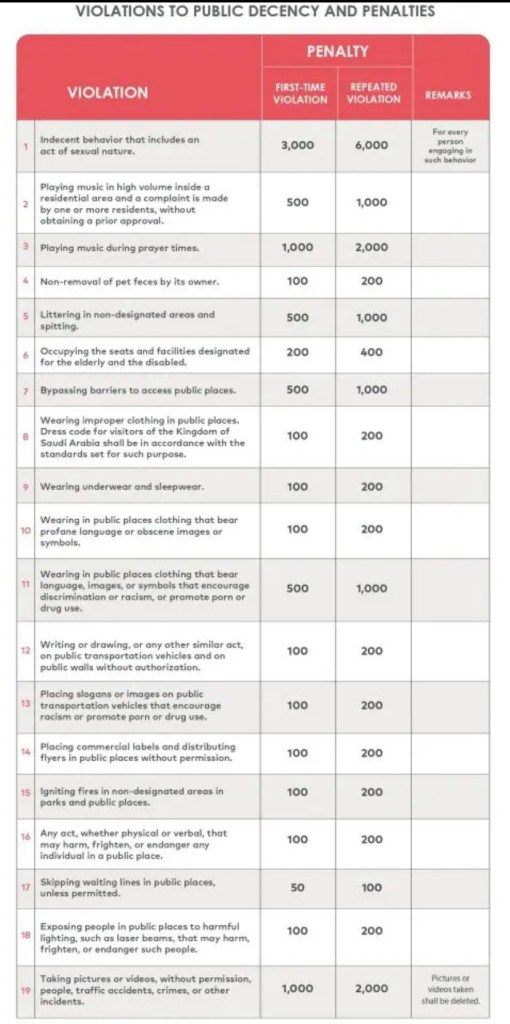
Ang Public Decorum code 2019 ay nagpapataw ng mga multa at pagkakulong sa maling pag-uugali sa mga pampublikong lugar. Pinarurusahan ng batas ang mga nagdudulot ng panganib sa mga tao o nakakasakit sa kalikasan.

Ang batas ay nagsasaad na ang pagsusuot ng “malaswa” na mga damit, at pagpapakita ng mga nakakasakit na larawan, simbolo o parirala ay isang gawang mapaparusahan ng Estado ng Saudi Arabia na may multang SR 200.
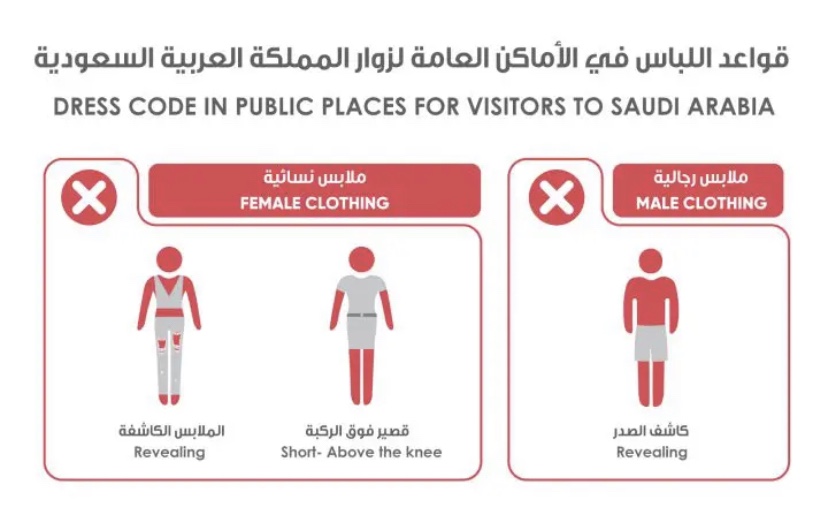
Ano ang indecent shorts?

Paglilinaw sa pahayag, si Badr Al Zayani, na dating pinuno ng Saudi Public Decorum Society, ang mga shorts na hindi lampas sa tuhod ay itinuturing na bastos na isuot sa publiko.

Sa isang panayam, sinabi niya na mayroong iba’t ibang uri ng shorts tulad ng shorts para sa paglalaro ng football, basketball, paglalakad, paglangoy, atbp. Kailangang maunawaan ng mga tao na mainam na magsuot ng mga ito habang naglalaro ng partikular na laro ngunit hindi sa isang shopping mall o isang pampublikong parke.

Ipinahayag din niya na ang mga pampublikong lugar ay iba sa mga beach at ang mga pampublikong lugar ay may dressing code.

Pinagmulan: Gulf News
Bawal Shorts sa mga Mosque

Ang isa pang sugnay ay idinagdag sa Public Decorum code 2019 ayon sa kung saan SR 500 na multa ang ipinapataw sa mga nagsusuot ng anumang uri ng shorts sa mga Mosque sa Saudi Arabia.

Pinagmulan: Saudi Gazette
MHRSD: No work permits for newly hired foreign workers in Nitaqat yellow category

Saudi Gazette report

RIYADH —
The Ministry of Human Resources and Social Development (MHRSD) has stated that no work permits will be issued for the newly hired foreign workers of companies and establishments that fall within the yellow category of the Updated Nitaqat Saudization program.

The ministry made this clarification with regard to queries about the possibility of issuing a work permit for the newly hired foreign workers in the establishments that are within the yellow category of the Updated Nitaqat program.

It further added that the work permit of the foreign worker in the yellow category establishment would not be renewed in the event of the worker spending more than six years in Saudi Arabia.

A few years ago, the ministry decided to eliminate the yellow band of the Nitaqat program effective from January 26, 2020. The decision was to automatically transform yellow-rated companies to the red band and to consider noncompliant with Saudization levels until their rating improves. Such downgraded companies would not be able to apply for new visas for foreign nationals, change foreign workers’ professions or renew work permits until their ratings improve.

The ministry started implementing the Updated Nitaqat program for all private-sector companies and establishments from Dec.1 2021. This was in line with the ministry’s labor market strategy that aims to enhance market efficiency and provide new attractive jobs for young Saudi men and women.

It is worth mentioning that the Updated Nitaqat program aims to increase and expand job opportunities, and raise the participation of Saudi male and female citizens in the labor market, and thus contributing to the Kingdom’s gross domestic product (GDP). The program, which comes in line with the other localization programs launched by the ministry, targets to create more than 340,000 jobs within three years. The first version of the Nitaqat program was launched in 2011, which aimed to encourage the localization of jobs and set a minimum wage for Saudis in the private sector.

Bagong Batas ng Saudi na Ikukulong ang mga Cross-dresser ng Hanggang 3 Taon

Nagbabala ang isang eksperto na ang mga taong lumalabas sa publiko na nakadamit tulad ng ibang kasarian ay maaaring maharap ng hanggang tatlong taon sa bilangguan sa ilalim ng bagong penal code ng Saudi Arabia.

Ayon kay Mohammed Al Wahaibi, legal na tagapayo sa Saudi TV Al Saudaih, ang sinumang gumagaya sa ibang kasarian sa pananamit, hitsura, at anyo ay mahaharap sa malupit na parusa.

Sa ilang mga kaso, ang pagsusuot ng damit na lumalabag sa pampublikong ugali at lumalabag sa moralidad ay maaaring maging isang krimen. Ayon sa mga regulasyon ng penal, ang kasuotan na nagmumungkahi ng panggagaya sa kababaihan ay ilegal.

Ito ay pinlano na maglabas ng isang bagong penal code sa lalong madaling panahon na tutugon sa imitasyon ng mga hitsura at pananamit ng isang kasarian ng isa pa.

Ang krimen ay hindi isang felony. Ito ay isang krimen na nagdadala ng maximum na sentensiya ng tatlong taon sa bilangguan,” aniya.

Ang lipunan ng Saudi ay kilala sa konserbatismo, mabuting moral at magandang hitsura, at hindi namin kukunsintihin ang anumang pag-aalipusta o pagbaluktot sa imaheng iyon.”

Ang mga bantay sa mga pampublikong lugar at palengke ay dapat lamang mag-ulat ng mga kaso ng cross-dressing, hindi arestuhin ang mga nagkasala, dahil responsibilidad iyon ng pulisya.

Ang ulat ay hindi nakatanggap ng agarang opisyal na tugon.

Paalala ng Saudi Government sa lahat ng papunta sa Kaharian

Referral of a citizen to the Public Prosecution Transfer and easy entry of an American non-Muslim journalist to the holy capital

The media spokesman of the Makkah Region Police stated that the region police referred to the Public Prosecution an accomplice citizen who transferred and facilitated the entry of one of the journalists (non-Muslims) and holds American citizenship to the Holy Capital through his behavior of the path of Muslims, in clear violation of the regulations prohibiting the entry of Mecca for non-Muslims, where he

The media spokesman of the Makkah Region Police noted to all those coming to the Kingdom the need to respect the regulations and abide by what they require, especially with regard to the Two Holy Mosques and the Holy Sites, and that any violation of this kind is a crime that will not be tolerated, and penalties will be applied to the perpetrators based on the relevant regulations. The case of the journalist who committed the crime has been referred to the Public Prosecution to take what is necessary against him in accordance with the regulations.

Cases in which Domestic Workers can transferred to another Employer without approval of first employer


The Ministry of Human Resources and Social Development (MHRSD) in Saudi Arabia has clarified the cases in which the domestic worker can transfer to another employer without obtaining the approval of the first employer.

1. It is proven that the employer of the domestic worker was late in paying the salary of the domestic worker for a period of 3 continuous or separate salaries without a reason attributed to the domestic worker.

2. Failure to receive the domestic worker from the intermediary recruitment office, or without accommodation, within 15 days from the date of being notified by the recruitment office of domestic worker arrival in the Kingdom.

3. Failure to get iqama (residence permit) for the domestic worker, or not renewing it even after 30 days specified from the date of issuance or renewal.

4. The home business owner renting the services of the domestic worker to others.

5. Evidence of that the domestic worker has been assigned to dangerous work that threatens his or her health or the safety of his body.

6. Proof of that the domestic worker or a family member of employer has mistreated.

7. The presence of a complaint by the domestic worker against the employer and the domestic employer has caused her to prolong her consideration, given that the domestic worker has not caused or contributed to the prolongation of the complaint as well.

8. The domestic employer has submitted an incorrect report of Huroob (Absent From Work) against the domestic worker.

9. Failure of the domestic employer or his representative to appear before the domestic service workers, dispute settlement committees for 2 hearings of which he is notified.

10. If it is proven that the services of the domestic worker have been transferred to another employer without his knowledge.

11. If the domestic employer is absent, either due to his travel, imprisonment, or any other reason, and this results in the inability to pay the domestic worker’s salaries.

Saudi doctor helps in delivering a baby on plane

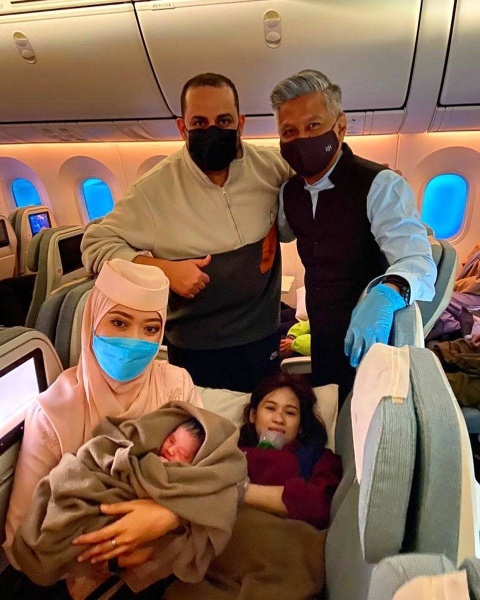
BRUNEI — Mulfi Al-Khinjar, a Saudi doctor, successfully delivered a baby after a pregnant Filipino woman in her 38th week of pregnancy went into labor on a Brunei Airlines flight from Dubai to Bandar Seri Begawan.

Dr. Al-Khinjar volunteered to help the pregnant woman in labor after being surprised by the flight crew’s calls inquiring if there was a doctor on board.

After the plane took off during his trip, Dr. Al-Khinjar, according to the agencies, said that he introduced himself to the crew soon on hearing the plea on the plane’s intercom.

He soon learned that a pregnant Filipina was enduring labor pains and needed help. On examining her, it became clear to him that she was about to give birth.

Dr. Al-Khinjar asked the crew to prepare whatever equipment available on board, in addition to communicating with the ground station to request advice from any specialist to record his recommendations.

After taking the recommendations from the ground station, Dr. Al-Khinjar said the ground station told him that it was left to him and the crew to take whatever actions they decide to assist the pregnant woman successfully deliver the baby.

The Saudi doctor said that he, with the help of the drew, succeeded in delivering the baby on the plane, and also confirmed that they followed up on the mother and her child’s condition throughout the 3-hour flight.

The Filipino woman, named Jenny Rose Josoy, and her new baby are in excellent health, Dr. Al-Khinjar said, noting that she was received at the airport with flowers.

Dr. Al-Khinjar confirmed that the Kingdom’s ambassador to Brunei, Imad Al-Muhanna, contacted him, and thanked and praised him for volunteering to save the life of the pregnant woman and her child.

The envoy also expressed his admiration on his behavior, which reflected positively on the reputation of Saudi Arabia.

The Saudi Arabia’s embassy in Brunei Darussalam has expressed its thanks and appreciation to Dr. Al-Khinjar, as it commended the doctor for raising the name of the Kingdom through this honorable work and efforts by performing the delivery for a Filipina on the flight bound to Bandar Seri Begawan.

The Saudi doctor Al-Khinjar is from Qurayyat city in Al Jouf Province, and holds a Doctor of Medicine (M.D.) from the University of Newcastle and a Master of Public Health (MPH) from the University of Melbourne.

Twelve expats arrested for creating and promoting fake links similar to a government platform in Riyadh

The Riyadh region police arrested, on Friday, 12 expatriates of Yemeni nationality for committing fraud and fraud operations, which consisted in establishing and broadcasting fake electronic links similar to one of the government platforms, and promoting them; claiming to provide services through them.

The police explained that the arrested, six violators of the border security system, and 6 residents who violated the residency system, seized the money from their victims, and transferred it out of the Kingdom, using a housing unit in Riyadh as the headquarters for their crimes.

She noted that they were seized in possession of 33 mobile phones and 15,616 riyals, indicating that they were stopped, taking legal measures against them, and referring them to the Public Prosecution.

Mababayaran ang mga pasahero mula sa Airlines para sa pagkawala, pagkasira o pagkaantala ng Luggage – GACA

Ang General Authority of Civil Aviation (GACA) sa Saudi Arabia ay nagpataw ng pinansiyal na kabayaran sa mga airline, kung maantala o mawala o masira ang mga bagahe ng pasahero. Kinakailangan ng Airline na bayaran ang customer sa loob ng 30 araw mula sa petsa ng pagtanggap ng claim sa kompensasyon.


Ipinaliwanag pa ng GACA na dapat bayaran ng air carrier ang bawat customer na may hawak ng ticket na may minimum na 1,820 Saudi Riyals at hindi hihigit sa 6,000 riyals para sa pagkawala, pinsala o pagkaantala ng bagahe.

  • Ang mga pasaherong gustong taasan ang antas ng kompensasyon dahil ang kanyang bagahe ay naglalaman ng mahahalaga o mataas na halaga ng mga bagay ay dapat ibunyag sa airline ang kanilang presensya at halaga nito bago sumakay sa flight.
  • Dapat mabayaran ang mga customer kung sakaling maantala ang kanilang mga bagahe, katumbas ng 104 riyals para sa bawat araw ng pagkaantala at maximum na 520 riyals para sa mga domestic flight, sabi ng GACA.

Ang mga kumpanya ng pribadong sektor na kumukuha ng mga manggagawa ay hindi magbabayad ng atraso sa bayad

JEDDAH — Inilibre ng Ministry of Human Resources and Social Development ang mga kumpanya at establisimiyento ng pribadong sektor mula sa mga hindi pa nababayarang bayad ng gobyerno ng mga manggagawang naglilipat ng kanilang mga serbisyo sa mga pasilidad na ito. Ang bagong tuntunin ay ilalapat sa mga manggagawa na ang mga serbisyo ay inililipat mula Hunyo 9, nalaman ng Okaz/Saudi Gazette.

Ayon sa bagong desisyon, ang kumpanya o establisyimento kung saan naghahangad ng paglilipat ng serbisyo ang manggagawa ay kailangang pasanin ang hindi pa nababayarang bayad ng gobyerno, kabilang ang bayad sa permit sa trabaho, bayad sa expatriate (pinansyal na kabayaran), at mga multa para sa pagkaantala sa pag-renew ng residency permit (iqama). Ang platform ng Qiwa ng ministeryo ay nagsimulang i-activate ang desisyon ng pagsingil sa mga bayarin na ito mula sa mga dating employer ng mga manggagawa.

Ang mga mapagkukunan ng Qiwa ay nagpahayag na ang bagong desisyon ay hindi naaangkop sa mga manggagawa na ang mga serbisyo ay inilipat bago ang Hunyo 9. Ang desisyon ay naglalayong bigyang-daan ang mga bagong negosyo na maisagawa ang kanilang mga negosyo nang walang hindi inaasahang pananalapi na mga obligasyon, at sa gayon ay matiyak ang patas na kompetisyon sa iba pang mga negosyo, bilang karagdagan sa hindi paglantad sa kanila sa mga kahirapan sa pananalapi. Sa ilalim ng nakaraang mekanismo, ang mga establisyimento, na naghahangad ng paglilipat ng serbisyo ng mga manggagawa, ay kailangang pasanin ang mga bayarin para sa mga permit sa trabaho, expatriate levy at mga multa para sa pagkaantala sa pag-renew ng iqama.

Samantala, ang bilang ng mga pribadong sektor na establisyimento sa Kaharian ay umabot sa 773,175 sa pagtatapos ng unang quarter ng 2022. Ang bilang ng mga hindi-Saudi na subscriber ng General Organization for Social Insurance (GOSI) sa mga establisimiyento ay umabot sa humigit-kumulang 6.61 milyong lalaki at mga manggagawang babae.

Ang mga establisyimento ng pribadong sektor, kung saan ang mga dayuhang manggagawa ay higit sa Saudi, ay kailangang magbayad ng taunang bayad na nagkakahalaga ng SR9600 (SR800 bawat buwan) para sa bawat dayuhang manggagawa. Ilang buwan na ang nakalilipas, ipinakilala ng gobyerno ang isang bagong sistema ng hating pagbabayad ng bayarin ng gobyerno sa quarterly, half-yearly at three-quarterly basis, bukod sa dating sistema ng taunang pagbabayad para sa renewal ng work permit at iqama.

Police is the competent authority for complaints about harassing employer – MHRSD

Watch: https://youtu.be/dBhBO3285wc

The Ministry of Human Resources and Social Development in Saudi Arabia confirmed that, in case of harassment at a workplace, a report of bad behavior can be submitted through the ministry’s services app called HRSD Application.

The Ministry explained that, if the aggressor is employer, the complaint can be lodged through the competent legal authorities, represented by police.

– In case of a behavioral violation happened at workplace, a complaint should be submitted to the establishment within 5 working days from the date of occurrence of bad behavior, and a copy of complaint lodged with the company should be attached along with HRSD application.

– The Ministry’s application provides easy access to selected HRSD e-services and offers an excellent experience and efficient communication channels. It allows people to book an appointment, file a complaint and submit a grievance.

– Causing physical, psychological, sexual or economic harm to another party comes in the list of harassment. It accounts for all types of exploitation, threat, extortion, enticement, quarreling, cursing, insulting or prejudice modesty or deliberately secluding with opposite gender or any form of physical or verbal discrimination.

– The regulation also have misconduct among workers either during working hours or outside working hours. Through HRSD application, a maximum of 3 types of violations can be reported daily against the designated companies.

– The HRSD app includes major classification of violations, like, violation of Saudi Labor Law, violations related to behavioral violation, violations of precautionary measures of companies and individuals, violations of occupational safety and health and violations of Saudization.

– The violations of behavioral infringement includes assisting or covering up harassment (any word, act or gesture with a sexual connotation by a person against another), the failure of company to investigate or impose a disciplinary penalty on those who have been convicted of harassment and failure of company to form a committee to investigate cases of behavioral abuse at workplace, according to a report of Saudi Gazette.