
OWWA maglulunsad ng programa para sa mga anak ng OFWs
The Ministry of Human Resources and Social Development (MHRSD) in Saudi Arabia has clarified the cases in which the domestic worker can transfer to another employer without obtaining the approval of the first employer.
1. It is proven that the employer of the domestic worker was late in paying the salary of the domestic worker for a period of 3 continuous or separate salaries without a reason attributed to the domestic worker.
2. Failure to receive the domestic worker from the intermediary recruitment office, or without accommodation, within 15 days from the date of being notified by the recruitment office of domestic worker arrival in the Kingdom.
3. Failure to get iqama (residence permit) for the domestic worker, or not renewing it even after 30 days specified from the date of issuance or renewal.
4. The home business owner renting the services of the domestic worker to others.
5. Evidence of that the domestic worker has been assigned to dangerous work that threatens his or her health or the safety of his body.
6. Proof of that the domestic worker or a family member of employer has mistreated.
7. The presence of a complaint by the domestic worker against the employer and the domestic employer has caused her to prolong her consideration, given that the domestic worker has not caused or contributed to the prolongation of the complaint as well.
8. The domestic employer has submitted an incorrect report of Huroob (Absent From Work) against the domestic worker.
9. Failure of the domestic employer or his representative to appear before the domestic service workers, dispute settlement committees for 2 hearings of which he is notified.
10. If it is proven that the services of the domestic worker have been transferred to another employer without his knowledge.
11. If the domestic employer is absent, either due to his travel, imprisonment, or any other reason, and this results in the inability to pay the domestic worker’s salaries.
Usap-usapan ngayon sa iba’t-ibang social media platforms ang exchange rate dahil sa pagbulusok ng halaga ng piso kontra dolyar.
Marahil marami ka na rin sigurong naririnig na kuro-kuro patungkol dito. May mga nagsasabing hindi ito maganda sapagkat nakakaapekto ito sa pagtaas ng presyo ng mga bilihin.
Meron din namang naniniwalang nakabubuti ito lalo na sa mga pamilyang umaasa sa perang padala o remittances ng mga kamag-anak nilang nasa abroad.
Subalit ano nga ba ang katotohanan sa likod ng pagbagsak ng halaga ng piso?
Ano nga ba ang exchange rate?
Ang exchange rate ay ang katumbas na halaga ng isang domestikong salapi laban sa isang banyagang salapi.
Kung ilalagay natin ito sa konteksto ng Pilipinas, ang kasalukuyang exchange rate ng piso kontra dolyar ay nasa 54 pesos na kada US dollar (USD). Ito na ang pinakamababang naitalang palitan sa nakalipas na 12 na taon (Figure 1).
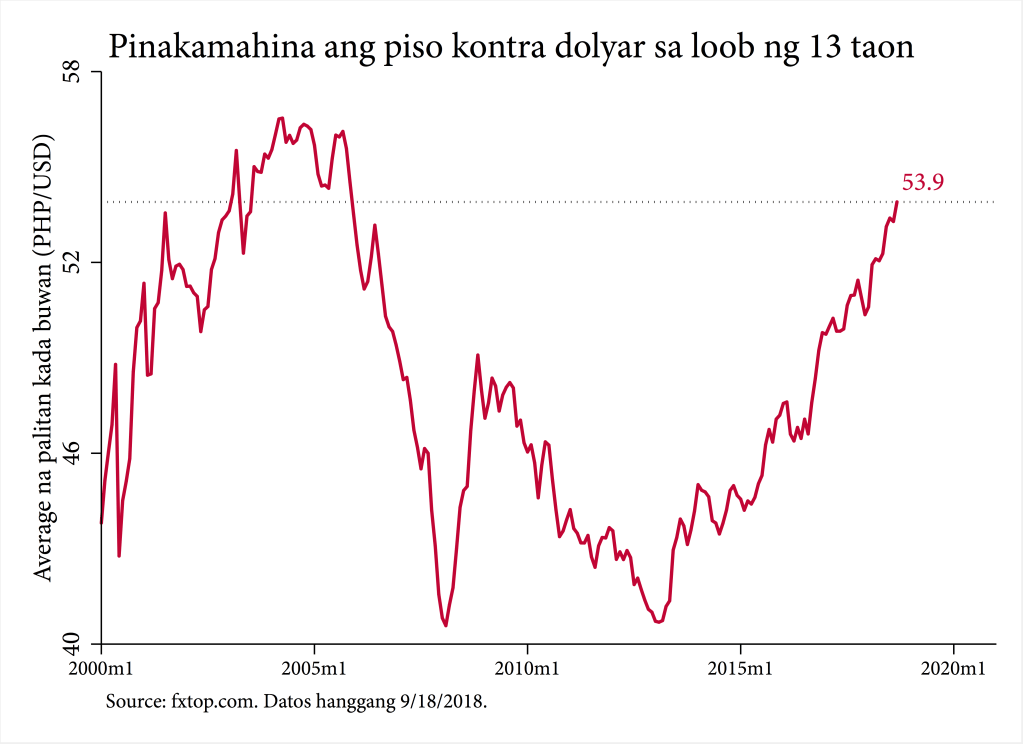
Para sa kaalaman ng lahat, hindi naman bago sa atin ang paghina ng piso kontra dolyar.
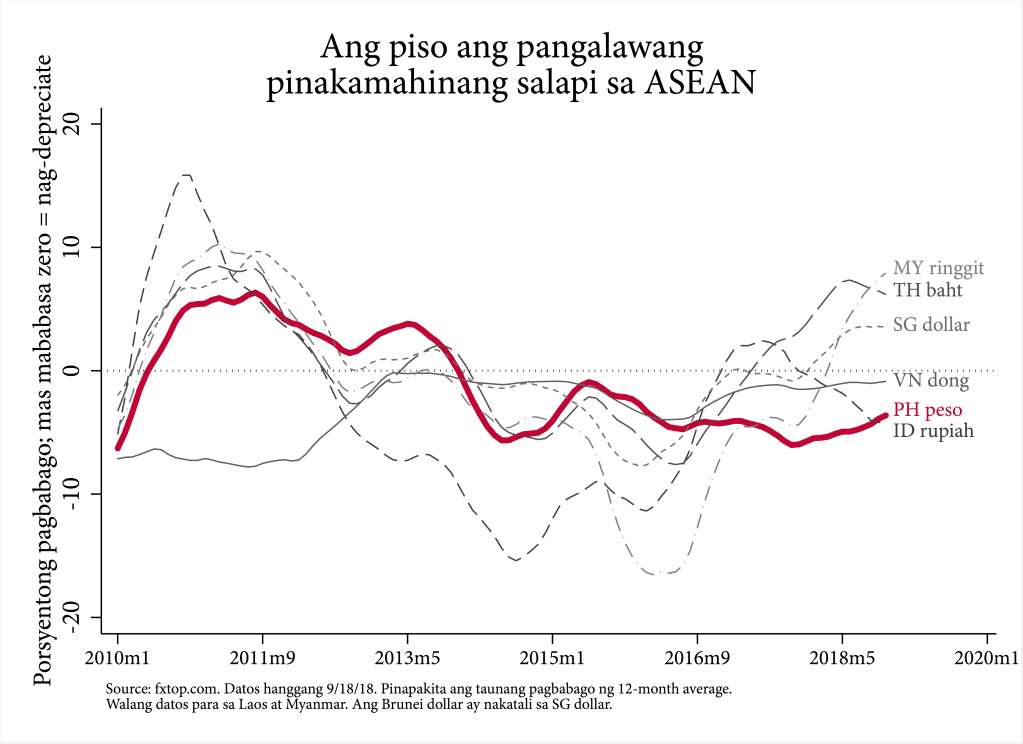
Sa katunayan, taong 2013 pa nagsimulang humina ang palitan ng piso kontra dolyar, sumabay ito sa paghina ng iba’t ibang currencies ng ating mga karatig-bansa sa rehiyong ASEAN.
Subalit noong 2016, nagsimulang makabawi ang karamihan sa kanila maliban sa Philippine peso (Figure 2). Kaya hindi totoo na isa lamang “global trend” ang pagbagsak ng halaga ng piso.
Bakit nagbabago-bago ang exchange rate?
Sa kasalukuyan, ang Pilipinas ay nagpapatupad ngfloating exchange rate regime, kung saan ang halaga ng piso laban sa dolyar ay nakadepende sa paggalaw ng kani-kanilang demand at supply sa merkado.
Halimbawa, kung bibili tayo ng imported goods sa US, nararapat lamang na ang perang ipambabayad natin sa bansang ito ay nasa US currency, o nasa dolyar.
Samakatuwid, ang labis na pag-aangkat (importation) ay nagiging sanhi ng mabilis na paglabas ng dolyar sa ating bansa. Ito’y nagdudulot ng pagbaba ng supply ng dolyar kumpara sa piso.
Ayon sa basic Economics, ang pagbaba ng supply ay nagiging dahilan ng pagtaas ng halaga ng isang bagay. Halimbawa, mas mahal ang presyo ng bigas kapag nagiging limitado ang supply nito tuwing may krisis o kalamidad.
Maari rin nating gamitin ang konseptong ito sa currencies. Kapag nagiging limitado o bihira ang supply ng dolyar kumpara sa piso, tumataas ang halaga nito laban sa piso, na magreresulta sa mas mababang palitan o ‘mataas’ na exchange rate.
Ayon mismo kay Budget Secretary Benjamin Diokno, ang pagbaba ng halaga ng piso ay dahil sa tumataas nating imports na dulot ng Build, Build, Build (BBB)—ang pangunahing programang pang-ekonomiya ng Administrasyong Duterte.
Ang mga proyektong kaakibat ng BBB ay nangangailangan ng mga materyales (gaya ng mga construction materials) na kailangan pa nating angkatin mula sa ibang bansa.

Masama ba o mabuti ang paghina ng piso?
Isa sa mga mabuting naidudulot ng ‘mataas’ na exchange rate ay ang pagtaas na halaga ng OFW remittances.
Kung nagpapadala ang tatay mong nasa California ng 1,000 USD kada buwan, ang pagtaas ng palitan mula 53 pesos patungong 54 pesos ay magbibigay sa iyo ng additional 1,000 pesos.
Bagamat maganda ang epekto ng tumataas ng exchange rate sa mga pamilyang umaasa sa remittances, dapat mo ding malaman na may epekto ito sa pagtaas ng presyo ng mga bilihin (inflation). (BASAHIN: Ano ang katotohanan sa inflation?)
Maraming sektor sa ating ekonomiya ang umaasa sa mga imported goods. Isa na siguro sa pinaka-apektado ng mataas na palitan ay ang sektor ng transportasyon. Pag humina ang piso, mas nagiging mahal ang mga produktong petrolyo sa pandaigdigang merkado, pati na rin ang gastos ng mga tsuper at driver, kaya asahan ang pagtaas ng mga pamasahe.
Isa rin sa madalas nating marinig na sinasabing magandang epekto ng ‘mataas’ na exchange rate ay ang posibleng pagtaas ng exports.
Base sa teorya sa Economics, kapag bumababa ang halaga ng domestikong salapi kumpara sa halaga ng banyagang salapi, nagiging mas mura ang mga produkto ng isang domestic country sa mata ng mga banyaga.
Isang magandang halimbawa nito ay ang China. Ilang beses nang pinaratangan ang China na sinasadya nilang pababain ang halaga ng Yuan para manatiling malakas ang kanilang exports.

Subalit kung titignan mo ang ating datos ng exports, makikita mong hindi naman lumalago masyado ang ating exports kahit na bumabagsak ang halaga ng piso (Figure 3).
Anong ibig sabihin nito? Na mali ang teorya sa economics? Hindi naman sa ganun, sapagkat may iba pang salik—tulad ng presyo at kalidad ng produkto—na maaring nakakaapekto sa malamlam nating exports sa pandaigdigang merkado.
Isa pang masamang naidudulot ng paghina ng piso ay ang pagtaas ng halaga ng ating utang panglabas (o ang ating external debt). Ayon sa Banko Sentral ng Pilipinas, ito’y umabot na sa 72.2 billion USD.
Samakatuwid, ang pagbaba ng exchange rate ay parehong mayroong positibo at negatibong epekto. Marahil ang kailangan lang nating pag-isipan ay kung anong epekto ang nangingibabaw at mas nararamdaman ng buong bansa.
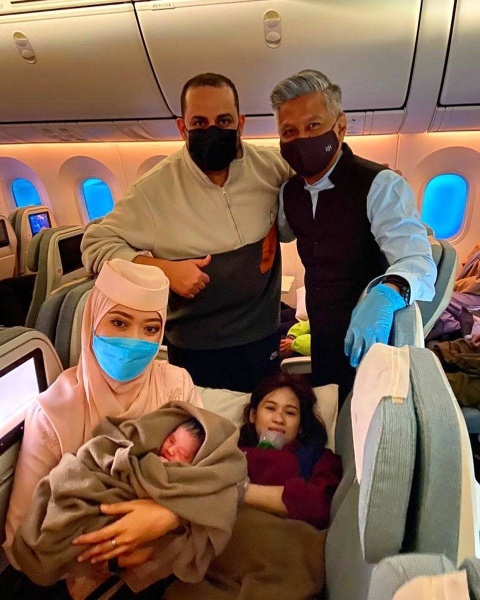
BRUNEI — Mulfi Al-Khinjar, a Saudi doctor, successfully delivered a baby after a pregnant Filipino woman in her 38th week of pregnancy went into labor on a Brunei Airlines flight from Dubai to Bandar Seri Begawan.
Dr. Al-Khinjar volunteered to help the pregnant woman in labor after being surprised by the flight crew’s calls inquiring if there was a doctor on board.
After the plane took off during his trip, Dr. Al-Khinjar, according to the agencies, said that he introduced himself to the crew soon on hearing the plea on the plane’s intercom.
He soon learned that a pregnant Filipina was enduring labor pains and needed help. On examining her, it became clear to him that she was about to give birth.
Dr. Al-Khinjar asked the crew to prepare whatever equipment available on board, in addition to communicating with the ground station to request advice from any specialist to record his recommendations.
After taking the recommendations from the ground station, Dr. Al-Khinjar said the ground station told him that it was left to him and the crew to take whatever actions they decide to assist the pregnant woman successfully deliver the baby.
The Saudi doctor said that he, with the help of the drew, succeeded in delivering the baby on the plane, and also confirmed that they followed up on the mother and her child’s condition throughout the 3-hour flight.
The Filipino woman, named Jenny Rose Josoy, and her new baby are in excellent health, Dr. Al-Khinjar said, noting that she was received at the airport with flowers.
Dr. Al-Khinjar confirmed that the Kingdom’s ambassador to Brunei, Imad Al-Muhanna, contacted him, and thanked and praised him for volunteering to save the life of the pregnant woman and her child.
The envoy also expressed his admiration on his behavior, which reflected positively on the reputation of Saudi Arabia.
The Saudi Arabia’s embassy in Brunei Darussalam has expressed its thanks and appreciation to Dr. Al-Khinjar, as it commended the doctor for raising the name of the Kingdom through this honorable work and efforts by performing the delivery for a Filipina on the flight bound to Bandar Seri Begawan.
The Saudi doctor Al-Khinjar is from Qurayyat city in Al Jouf Province, and holds a Doctor of Medicine (M.D.) from the University of Newcastle and a Master of Public Health (MPH) from the University of Melbourne.

Wala nang lusot sa kamay ng batas ang mga kriminal na gumagamit ng Facebook messenger sa kanilang kalokohan.
Ito’y matapos ilabas ng Supreme Court (SC) ang desisyon na nagdedeklara sa mga chat at larawan na ipinadala sa messenger bilang katanggap-tanggap na ebidensiya sa korte kung ang mga ito ay nakuha ng isang pribadong indibiduwal.
Ayon sa artikulo na nilabas sa SC website nitong Biyernes, ang desisyon ay mula sa kaso ni Christian Cadajas.
Hinatulan si Cadajas sa kasong paglabag sa Anti-Child Pornography Act.
Noong 2016, ang 24-anyos pa lamang na si Cadajas ay nakipag-chat sa isang 14-anyos na babae sa messenger at hiningian niya ito ng mga hubad na larawan. Nabasa ng ina ng dalagita ang kanilang mga message at pinilit niya ang anak na bigyan siya ng screenshot ng mga ito.
Sa pagharap sa korte, dumepensa si Cadajas na hindi dapat tanggapin bilang ebidensiya ang chat nila sa messenger dahil pinapasok na umano ang kanyang privacy.
Ngunit ayon sa SC, ang right to privacy na nasa batas ay pumoprotekta sa publiko laban sa panghihimasok ng mga alagad ng batas.
Sa kaso ni Cadajas, hindi gobyerno ang humalungkat ng mga chat niya sa messenger kundi ang ina ng dalagita na isang pribadong indibiduwal.
Dagdag pa ng SC, hindi swak ang depensa ng akusado sa Data Privacy Act. Kaya naman, pinanghawakan ng SC ang desisyon na nagdidiin sa akusado sa kanyang kaso. (Mark Joven Delantar)

The Riyadh region police arrested, on Friday, 12 expatriates of Yemeni nationality for committing fraud and fraud operations, which consisted in establishing and broadcasting fake electronic links similar to one of the government platforms, and promoting them; claiming to provide services through them.
The police explained that the arrested, six violators of the border security system, and 6 residents who violated the residency system, seized the money from their victims, and transferred it out of the Kingdom, using a housing unit in Riyadh as the headquarters for their crimes.
She noted that they were seized in possession of 33 mobile phones and 15,616 riyals, indicating that they were stopped, taking legal measures against them, and referring them to the Public Prosecution.

Ang General Authority of Civil Aviation (GACA) sa Saudi Arabia ay nagpataw ng pinansiyal na kabayaran sa mga airline, kung maantala o mawala o masira ang mga bagahe ng pasahero. Kinakailangan ng Airline na bayaran ang customer sa loob ng 30 araw mula sa petsa ng pagtanggap ng claim sa kompensasyon.
Ipinaliwanag pa ng GACA na dapat bayaran ng air carrier ang bawat customer na may hawak ng ticket na may minimum na 1,820 Saudi Riyals at hindi hihigit sa 6,000 riyals para sa pagkawala, pinsala o pagkaantala ng bagahe.
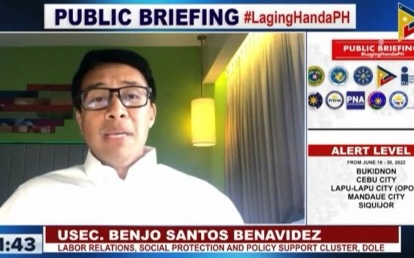
MANILA – The Philippines is among countries that will greatly benefit from the amendments to several provisions of the Maritime Labor Convention of 2006, the Department of Labor and Employment (DOLE) said on Friday.
In a Laging Handa briefing, Labor Undersecretary Benjo Benavidez said these amendments that were adopted during the recently concluded International Labor Convention (ILC) in Switzerland are timely considering that the country is sending thousands of seafarers to work abroad.
“There are eight provisions amended there and the very important one is provision on repatriation,” he said.
Benavidez said that under the amendment, the ship owner and its agent are obliged to arrange for the repatriation of a seafarer who got sick or got into an accident or had his or her contract either expired or terminated.
“If he is a Filipino, bring him back to the Philippines,” he said.
Benavidez added that the seafarers were also provided free internet access to be able to communicate with their families or loved ones.
“Also, because of our experience with the (coronavirus disease 2019 (Covid-19) pandemic, we have amended provisions on access to information. Because of the lockdown, seafarers need access to their families, so we make your access to internet communication mandatory while he is on the ship,” he said.
Another significant amendment is the right of seafarers to suitable personal protective equipment (PPE).
“You know, the built of the Filipinos are something different, so it seems that the size of the PPE of our fellow seafarers who work on ships and cargo vessels is just right,” he added.
Likewise, Benavidez noted that seafarers are also given priorities in terms of basic needs such as food, accommodation and water,
“Again, these are lessons we learned when there was a lockdown and pandemic and because of those lessons we had to amend the Maritime Labor Convention so that we can better protect and promote the welfare of our Filipino seafarers. And we voted in favor of these amendments,” he added.
The ILC was held from May 27 to June 11 in Geneva. (PNA)
JEDDAH — Inilibre ng Ministry of Human Resources and Social Development ang mga kumpanya at establisimiyento ng pribadong sektor mula sa mga hindi pa nababayarang bayad ng gobyerno ng mga manggagawang naglilipat ng kanilang mga serbisyo sa mga pasilidad na ito. Ang bagong tuntunin ay ilalapat sa mga manggagawa na ang mga serbisyo ay inililipat mula Hunyo 9, nalaman ng Okaz/Saudi Gazette.
Ayon sa bagong desisyon, ang kumpanya o establisyimento kung saan naghahangad ng paglilipat ng serbisyo ang manggagawa ay kailangang pasanin ang hindi pa nababayarang bayad ng gobyerno, kabilang ang bayad sa permit sa trabaho, bayad sa expatriate (pinansyal na kabayaran), at mga multa para sa pagkaantala sa pag-renew ng residency permit (iqama). Ang platform ng Qiwa ng ministeryo ay nagsimulang i-activate ang desisyon ng pagsingil sa mga bayarin na ito mula sa mga dating employer ng mga manggagawa.
Ang mga mapagkukunan ng Qiwa ay nagpahayag na ang bagong desisyon ay hindi naaangkop sa mga manggagawa na ang mga serbisyo ay inilipat bago ang Hunyo 9. Ang desisyon ay naglalayong bigyang-daan ang mga bagong negosyo na maisagawa ang kanilang mga negosyo nang walang hindi inaasahang pananalapi na mga obligasyon, at sa gayon ay matiyak ang patas na kompetisyon sa iba pang mga negosyo, bilang karagdagan sa hindi paglantad sa kanila sa mga kahirapan sa pananalapi. Sa ilalim ng nakaraang mekanismo, ang mga establisyimento, na naghahangad ng paglilipat ng serbisyo ng mga manggagawa, ay kailangang pasanin ang mga bayarin para sa mga permit sa trabaho, expatriate levy at mga multa para sa pagkaantala sa pag-renew ng iqama.
Samantala, ang bilang ng mga pribadong sektor na establisyimento sa Kaharian ay umabot sa 773,175 sa pagtatapos ng unang quarter ng 2022. Ang bilang ng mga hindi-Saudi na subscriber ng General Organization for Social Insurance (GOSI) sa mga establisimiyento ay umabot sa humigit-kumulang 6.61 milyong lalaki at mga manggagawang babae.
Ang mga establisyimento ng pribadong sektor, kung saan ang mga dayuhang manggagawa ay higit sa Saudi, ay kailangang magbayad ng taunang bayad na nagkakahalaga ng SR9600 (SR800 bawat buwan) para sa bawat dayuhang manggagawa. Ilang buwan na ang nakalilipas, ipinakilala ng gobyerno ang isang bagong sistema ng hating pagbabayad ng bayarin ng gobyerno sa quarterly, half-yearly at three-quarterly basis, bukod sa dating sistema ng taunang pagbabayad para sa renewal ng work permit at iqama.
 Storya Ni Juan Official